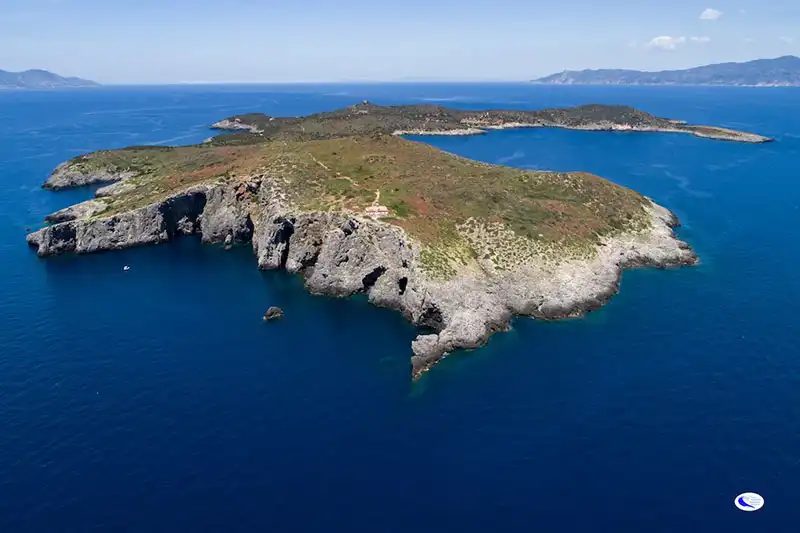
TUSCAN ARCHIPELAGO
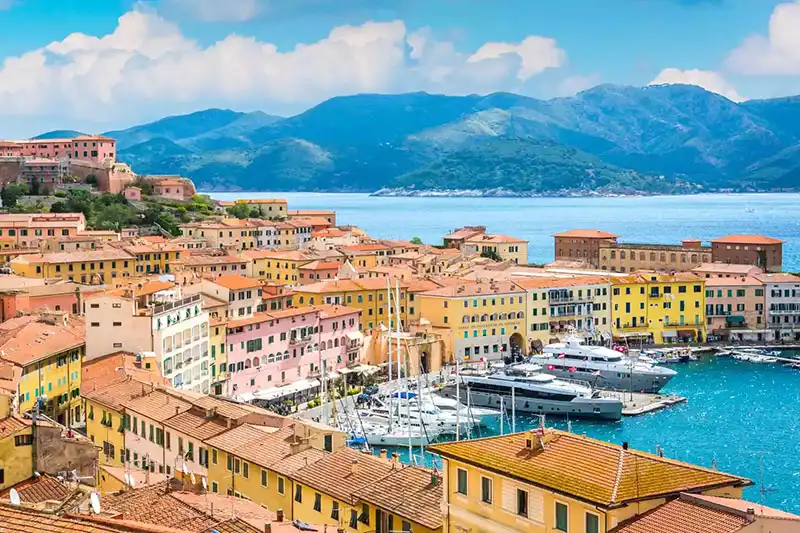
ELBA
Elba is the largest of the islands in the Tuscan Archipelago, and the third largest of the Italian islands. Its particularly mild climate, the variety of its 147 km of coastline and the majestic beauty of the Monte Capanne mountains have made it an internationally renowned tourist centre. The Island of Elba, a green oasis within the Tuscan Archipelago, is an island of endless horizons: crystal clear water lapped by golden beaches, granite rocks standing out from the bush, stories of people blessed by the sun. In the setting of a crystalline sea and sandy beaches, green gulfs and secret or sheer rock faces, the island is rich in pleasant surprises. There are shady forests, flat countryside and sun-drenched fields where agave and prickly pears reign supreme. Enjoy the clean air and the majestic beauty which nature has so generously given to the island, perhaps after a taste of the local cuisine, which blends maritime traditions and typically Tuscan customs.
PIANOSA
Pianosa, of all the islands in the Tuscan Archipelago, is the nearest to the Island of Elba and is in the Commune of Campo in Elba. The name Pianosa was originally Planasia due to the fact that its territory is practically completely flat, and the highest point is only 29 metres above sea level. The sea bed around the island is without a doubt among the richest and least polluted, partly thanks to the fact that fishing has been and still is strictly forbidden due to having been a prison there for many years, and partly because the morphology of Pianosa is such that the sea is very shallow, making it the perfect habitat both for Posidonia and for many different species of fish. The entire territory of the island is part of the Protected area number 1 inside the Park area, as are also the tiny islands of La Scarpa and La Scola, and this restriction is to be respected as far as one mile from the coast.
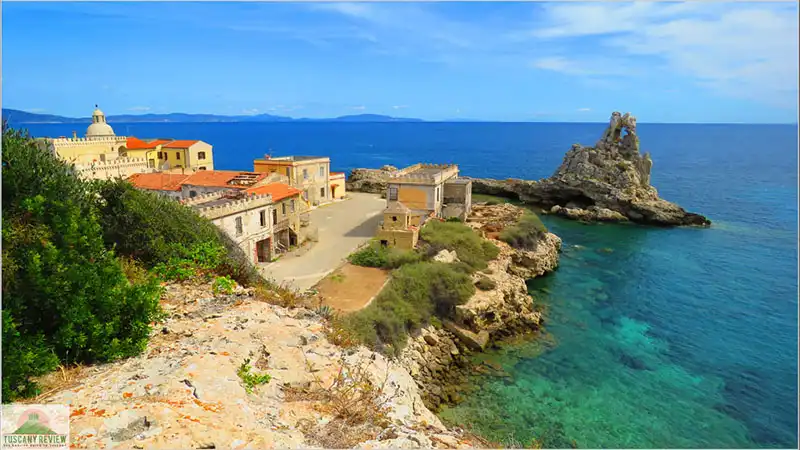
CAPRAIA
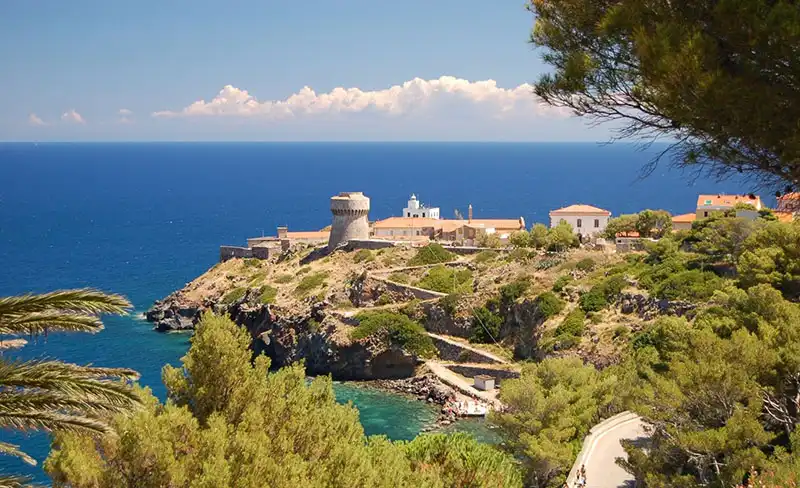
Between Corsica and Tuscany, in the Tyrrhenian Sea, lies the beautiful island of Capraia which originated from a volcano and is largely mountainous. Its special position, further from the mainland than the other islands in the Tuscan Archipelago National Park, makes it one of Italy’s least populated areas. Particularly beautiful areas include the Cala del Vetriolo, recognisable by its lava flows, where you can visit the cave and venture into underwater excursions, and the Cala della Mortola, near the port. The most famous attraction, however, is the Cala Rossa (Red Cove), which comprises the remains of an ancient volcanic vent, so called because of the intense colour of its rocks. Nearby is the Zenobito Tower, a perfect vantage point from which to admire the sunset dipping into the Tyrrhenian Sea.
MONTECRISTO
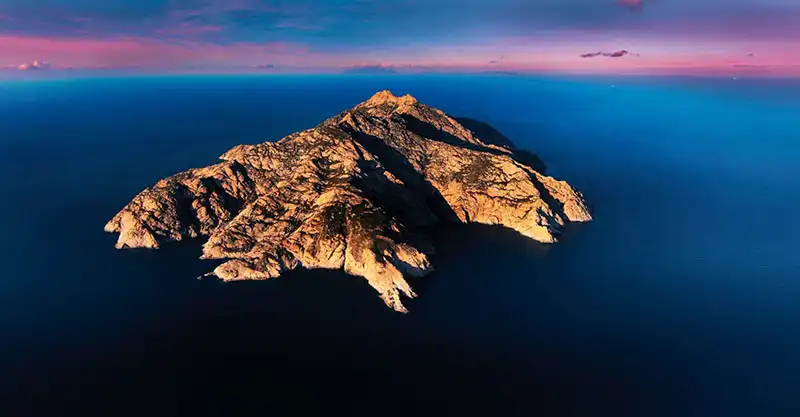
The Island of Montecristo, once called Oglasa is one of the most rugged and inaccessible islands in the Tuscan Archipelago National Park. The island has become famous thanks to the novel "The Count of Montecristo" by Alexander Dumas, that is the story of a legendary treasure hidden on the island of Montecristo in the Abbey of Saint Mamiliano, built in the 17th century by the Benedictine monks. Today, Montecristo is a nature reserve, left untouched by permanent residents and accessible only to a limited number of visitors each year through reservation. For the lucky few who get to see it, it is a veritable paradise. But the landscape alone does not reveal the island’s storied history.
GIGLIO
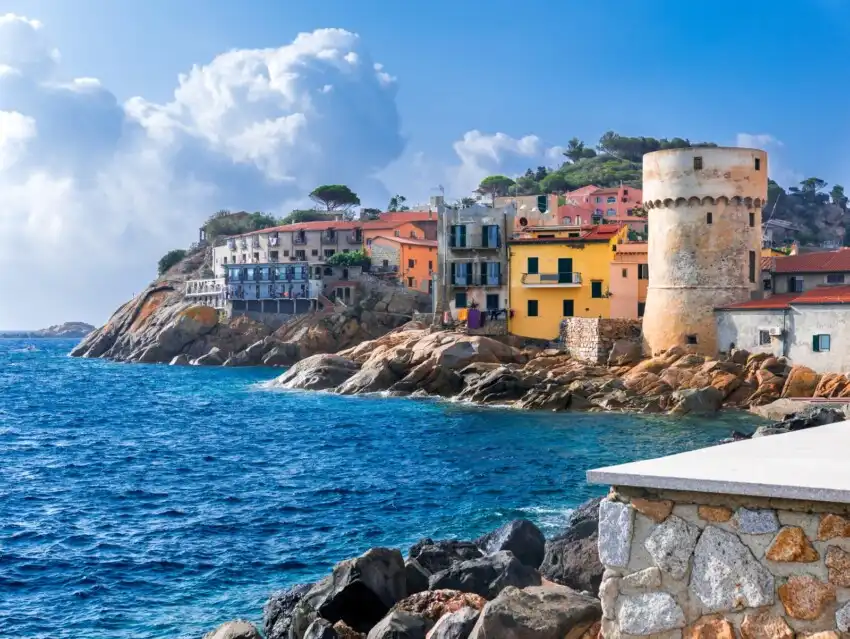
Like a pearl in an oyster, the small Giglio isle lies cradled by warm blue seas in the southern corner of the Tuscan Archipelago. Giglio’s mild climate, unspoilt nature and crystal clear, emerald-coloured waters, offer unforgettable holidays all year round. Head for the sandy beaches and beautiful coves if you want to relax, go for the incredibly rich underwater world if you’re into diving, or take one of the numerous hiking paths and explore the uncontaminated countryside of the Giglio Island. Nowadays, the port of the Giglio Island is a small, coloured village facing the sea, with two lighthouses and the old Saracen tower (“Torre del Saraceno”). It’s the heart of the island, especially during the summer, when all shops, bars and restaurants are open until night.
GORGONA
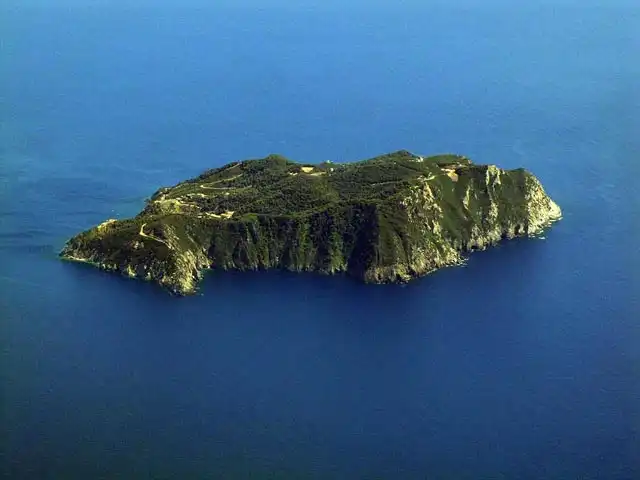
The Island of Gorgona is the smallest and most northern jewel in the archipelago, and is the last prison island in Italy. There are many inlets round the coast of Gorgona, and the most suggestive are Cala Scirocco, where the Grotto of Bove Marino is, once the home of the monk seal, Cala Maestra and Cala Martina. Today, the island is home to a small prison colony, otherwise it is almost uninhabited. The stretch of coastline is worth exploring for the beauty of its bays, access to which, however, is strictly controlled by the authorities.
GIANNUTRI
The island of Giannutri emerges from the waters of the Tyrrhenian like a white chalky crescent right on the southern fringe of the Tuscan Archipelago. Snorkelling and diving enthusiasts can discover the island’s true beauty underwater, but Giannutri is also perfect for trekking, with breath-taking sea views, Mediterranean scrubland and Roman ruins to explore. Poggio di Capel Rosso hill, the highest point on the island, offers truly unique views. You can explore the rocky cliffs, sea caves and beaches of Cala Maestra and Cala Spalmatoio during your yacht charter. Stopping for a dip at Cala Volo di Notte, Caletta di Scirocco, Cala dei Grottoni is highly recommended. The remains of a Roman boat can be found at Punta Scaletta.